
Why Your Body Feels Puffy, Stiff, or Inflamed
(And What That Means)
When your body feels swollen, achy, or like it’s holding onto everything, it’s not random — it’s signaling.
🗂️ Clean Eating & Detox
📅 May 18, 2026
🏷️ Inflammation | Bloating
Quick Cart Takeaways
Why Do I Feel Puffy, Stiff, or Inflamed?
It usually doesn’t start with something dramatic. It starts with small things that don’t quite make sense at first — the kind you almost brush off until they keep showing up.
Your rings feel tight by lunchtime. Your face looks puffy in the morning. Your joints feel older than they should. Your clothes fit differently, even though nothing significant has changed.
And the most frustrating part is that you can’t quite explain it, which is where your brain tries to fill in the blanks.
“I need to eat less.”
“I need to be stricter.”
“I must be doing something wrong.”
But that assumption skips over something important.
A lot of the time, your body isn’t failing. It’s responding — to pressure, to load, to signals it’s been receiving for a while now.
What Inflammation Actually Feels Like (Day to Day)
When people hear the word “inflammation,” they tend to think of something obvious — an injury, an illness, something visible and acute.
But in real life, especially in midlife, it’s rarely that dramatic.
Instead, it shows up as a body that feels subtly off in ways that are hard to pin down but impossible to ignore over time. You might feel puffier than usual, a little stiffer when you get up, or heavier in your body without any clear reason. You may notice that you react more to foods, stress, or poor sleep than you used to.
It’s not enough to stop your life.
But it is enough to make your body feel harder to live in.
And when that feeling lingers, it starts to shape how you move, how you think, and how you show up in your day.
Why It Matters (More Than You Think)
This isn’t just about bloating or a temporary change in how your clothes fit.
When inflammation stays elevated, even at a low level, it begins to influence multiple systems at once. Energy becomes less reliable. Mood feels less steady. Digestion becomes unpredictable. Hormones lose some of their natural rhythm.
And with that comes something quieter, but just as important — a loss of trust in your own body.
That’s when the cycle tends to kick in.
You feel off, so you try to tighten things up. You push harder, restrict more, or look for a faster fix. But your body, already under pressure, doesn’t respond the way you expect — so you push again.
And now you’re stuck in a loop that was never about effort to begin with.
This isn’t a motivation problem.
It’s a signaling problem.
The Real Drivers of Chronic Inflammation
This is where things start to make sense — not by pointing to one single cause, but by looking at the overall load your body is carrying.
For most women, inflammation isn’t triggered by one dramatic factor. It builds gradually through layers: food patterns, digestive stress, nervous system load, blood sugar instability, and lack of consistent movement.
Individually, none of these feel extreme.
Together, they create a system that’s constantly on edge.
Food patterns matter more than single ingredients
A heavily processed diet, especially one built around fried foods, packaged snacks, and restaurant oils, can push the body toward a more inflammatory pattern over time. The issue is usually not one single ingredient in isolation. It is the overall load: excess processed food, poor omega-6 to omega-3 balance, blood sugar disruption, and low nutrient density.
This is where it’s easy to get pulled into extremes, especially with all the noise around “good” and “bad” foods.
But inflammation is rarely about one ingredient. It’s about the pattern your body is navigating day after day — frequent processed foods, low nutrient density, imbalanced fats, and repeated blood sugar spikes.
That combination doesn’t break the body overnight, but it does keep inflammatory signaling turned up over time.
Your gut sits at the center of this
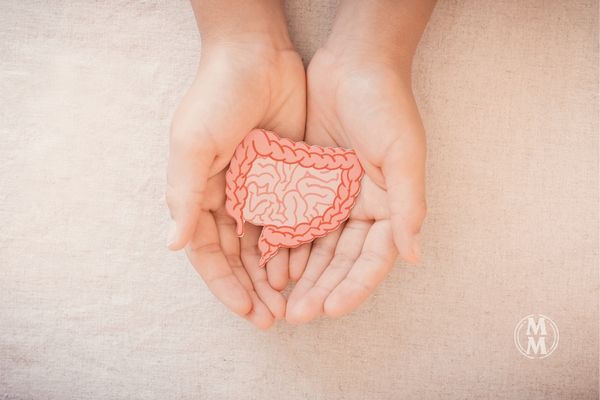
When digestion is under strain, the effects don’t stay in the gut.
A stressed gut can influence how your immune system responds, how reactive your body feels, and how well you tolerate both food and stress. This is why gut health keeps showing up again and again — not as a trend, but as a central player in how your body regulates itself.
Stress changes your biology
Stress isn’t just something you feel mentally. It changes biology — and it’s something your body has to process physically.
When that stress response stays active for too long, the body becomes more reactive, recovery slows down, and inflammation becomes easier to trigger and harder to resolve.
A braced body tends to hold — tension, fluid, even weight — because it’s operating from a place of protection.
Blood sugar quietly drives the experience
Blood sugar instability is one of the most overlooked drivers of how the body feels day to day.
When levels spike and crash, insulin rises to compensate. That shift can influence fluid retention, energy stability, and how your body handles incoming fuel.
When you feel puffy after certain meals, there is often a physiological reason behind it — not just coincidence.
Movement supports regulation
Movement isn’t about punishment or burning calories off.
It’s about circulation, rhythm, and signaling safety to the body. When you start to see movement this way, it shifts everything. It’s not punishment — it’s a simple, powerful tool your body actually responds to.
Without it, fluid can linger, circulation slows, and inflammatory markers tend to stay elevated. With it, even in simple forms like walking or light resistance work, the body has a better chance to regulate and release.
You do not need a bootcamp. But you do need movement. Regular physical activity is consistently associated with lower low-grade inflammation, and exercise training can improve inflammatory markers, especially when paired with nutrition changes.
Why Your Body Holds Onto Water and Weight
This is the point where most people assume something has gone wrong.
But what’s happening is often more protective than problematic.
When your body is under stress — whether that’s from food, hormones, sleep, or nervous system load — it shifts into a state designed to stabilize things. And that state tends to hold onto resources rather than release them.
That can look like water retention, changes in how your body carries weight, or fluctuations that don’t seem to match your efforts.
Cortisol and insulin are part of this picture. When they’re elevated or constantly fluctuating, your body becomes more likely to retain fluid and energy as a form of protection.
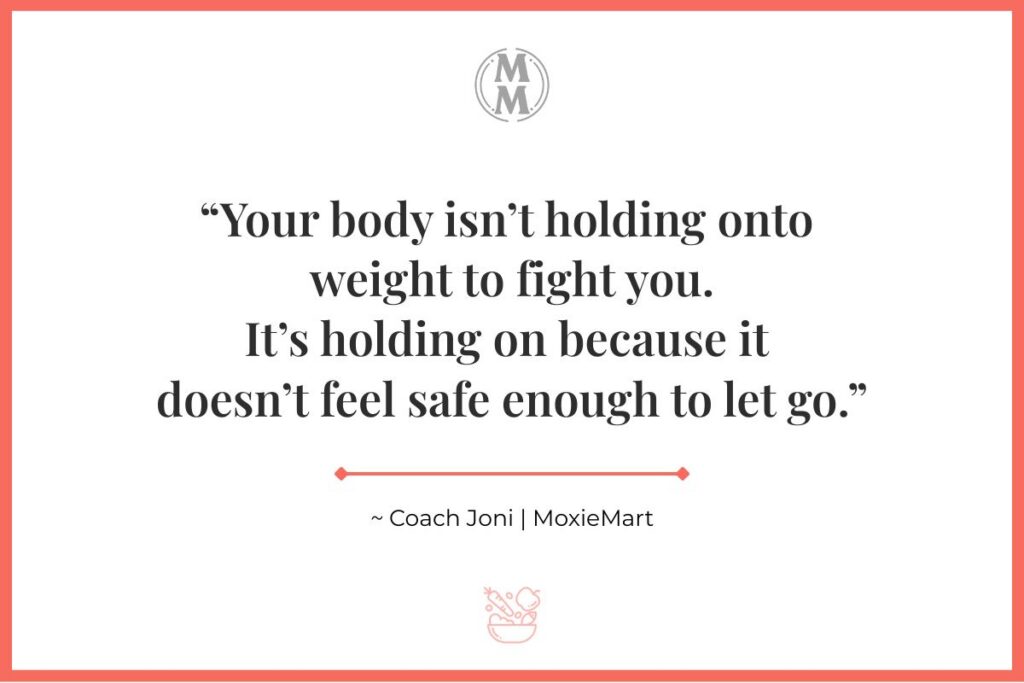
What feels like sudden weight gain is often your body responding to conditions that don’t feel stable yet.
Not because it’s broken.
But because it doesn’t feel safe enough to let go.
How to Reduce Inflammation (Without Going Extreme)
This is where most people expect a strict plan or a hard reset.
But what works better — and more sustainably — is reducing the overall load your body is dealing with.
Start with your inputs
This doesn’t require perfection. It requires awareness and consistency.
More whole foods.
Less reliance on packaged and fried options.
Better balance in the types of fats you’re using.
A steadier pattern of eating that your body can recognize and respond to.
This is why everything starts at the cart.
Support your gut before adding complexity
Instead of jumping into more rules or restrictions, start by paying attention.
Slow down your meals. Notice what consistently leaves you feeling puffy or uncomfortable. Support digestion before removing more foods.
That alone can shift more than people expect.
Calm the system
If your nervous system is constantly activated, your body will reflect that state. Do not treat nervous system regulation like fluff.
A constantly braced body is more reactive. Stress can influence inflammatory pathways and gut barrier function, so calming the system is part of the work, not a side quest.
You don’t need a full overhaul, but you do need moments where your system can downshift — walking, breathing, less stimulation while eating, and a more intentional end to your day.
These are small changes, but they change the environment your body is operating in.
Think:
- breathing between tasks
- getting outside
- less doom-scrolling while eating
- a more stable evening wind-down
If you feel stiff and stuck…
Move in a way your body can say yes to.
Walking after meals can help with glucose handling, and regular aerobic or resistance exercise helps reduce chronic inflammatory burden over time.
Not punishment.
Not “no pain, no gain.”
Just signals that tell the body:
we are safe, we are using this body, we can regulate.
Not to burn anything off.
But to create flow, circulation, and rhythm.
When the body feels supported instead of pushed, it becomes much more willing to release what it’s been holding onto.
Inflammation Trigger Check
Before you try to fix everything, take a step back and look at the pattern.
Ask yourself:
- Have I been eating more restaurant or packaged food lately?
- Have my vegetables, protein, and omega-3-rich foods dropped off?
- Am I sleeping poorly?
- Am I more stressed than usual?
- Am I constipated, bloated, or feeling reactive after meals?
- Am I moving less?
- Am I living on caffeine and catching up later?
- Do I feel puffier after high-sodium, high-sugar, or fried meals?
- Have I been “trying harder” instead of reducing the actual load on my body?
You don’t need to solve all of it today.
You just need to see what’s turning the dial up.
Coach’s Insight
One of the biggest mistakes women make here is assuming that feeling puffy automatically means they need to eat less.
Sometimes the smarter question is not, “How do I shrink myself fast?”
It is, “What is my body reacting to, and how do I lower the pressure?”
That is a very different conversation.
And it usually leads to better results.
So instead of asking how to fix it quickly, it’s more useful to ask what your body is responding to — because that’s where the real shift begins.
Smart Cart. Clean Start.
Download your free guide to shop cleaner, label smarter, & set yourself up for clean eating success — without the overwhelm.
Wrapping It Up
If your body feels puffy, stiff, or inflamed, that’s not something to fight.
It’s something to understand.
It may be your body telling you that the inflammatory load is too high, the gut is irritated, the stress response is overactive, or your daily inputs are not giving your system what it needs to settle down.
That does not mean you need to go extreme.
It means you need to get curious, reduce the pressure, and start making the kind of shifts your body can actually respond to.
Because your body isn’t working against you — it’s working to protect you under conditions that are asking more of it than it can comfortably handle.
This is not about punishment.
It is about learning how to read the signal.
If this is hitting home, don’t overhaul everything.
Start where it actually matters:
👉 Cart Before the Glow
Clean Eating Starts at the Cart — Not in a Recipe Book.
Inflammation FAQ: What You Need to Know
1. Is puffiness always inflammation?
No. Puffiness can also reflect sodium intake, hormones, hydration status, sleep, medications, or circulation issues. But recurring puffiness often overlaps with inflammatory and metabolic stress.
2. Can inflammation cause weight gain?
It can contribute to water retention, insulin disruption, reduced metabolic flexibility, and a body that feels like it is holding onto more. That is not always the same thing as rapid fat gain.
3. What’s the biggest driver of inflammation?
Usually the total load — food quality, stress, gut health, and blood sugar combined.
4. Can gut issues cause joint pain or puffiness?
Gut barrier dysfunction and microbiome disruption can contribute to systemic inflammation, which may affect how the whole body feels.
5. What is the first thing to do if I feel inflamed all the time?
Start by noticing patterns: food quality, digestion, sleep, stress, movement, and timing. Then reduce the biggest obvious load first.
Explore by Pillar

Clean Eating
Build a clean foundation without the overwhelm.

Gut Health
Banish bloat, balance bugs, & get your rhythm back. Fast!

Hormone Health
Decode midlife shifts & feel like yourself again.

Mood & Mind
From spirals to steady — regulate with grit & grace.

Longevity
Age-defying habits for women who still want to glow.

Reinvention
You’re not done — you’re just getting started. Buckle Up!